AI Agents for Dental Practices
How dental practices use AI agents for bookings, reminders and front-desk support that never sleeps.

Cogniva is a Melbourne-based AI systems consultancy that builds and integrates AI agents for Victorian businesses, including dental and allied health practices. Our view of dental automation is deliberately careful: the practices that benefit automate the logistics — reception, recall, booking — and protect the patient relationship, rather than putting a machine between anxious patients and the people they trust. We build to that line, start with the workflow most worth proving first, and handle the privacy and integration realities a healthcare deployment requires.
For a Melbourne dental practice, the case for AI agents is unusually clear — but only for specific parts of the operation. Dentistry is appointment-driven, recall-driven, and carries a heavy, repetitive front-desk load: booking, rescheduling, reminders, recall chasing, and answering the same routine questions all day. That's close to an ideal automation profile. But dentistry is also a care relationship, with anxious patients and clinically sensitive moments where automation is exactly the wrong tool. The whole skill is putting the line in the right place.
Cogniva builds AI agents for Victorian businesses, and in our experience the dental practices that benefit most are the ones automating the right three workflows — reception, recall, and booking — while keeping the human firmly in place for patient care and anything sensitive. This page breaks down where the return is and where the risk is.

Why dental practices are a strong fit
The structural reason dentistry suits agent automation is that a large share of front-desk work is genuinely routine and high-volume — the profile where agents perform best — while the sensitive work is a separable, smaller share. A practice's front desk spends much of its day on scheduling logistics that follow predictable patterns, and a smaller but critical portion on patient reassurance and judgement. That separability is what makes a clean division of labour possible, where a less structured business might not have one.
There's also a direct revenue angle that's sharper in dentistry than in most sectors: missed calls and lapsed recalls are lost revenue, concretely. A patient who can't get through after hours books with another practice. A recall that never gets chased is a check-up — and the treatment it would have caught — that doesn't happen. Automation that reliably captures those is capturing revenue that currently leaks out.
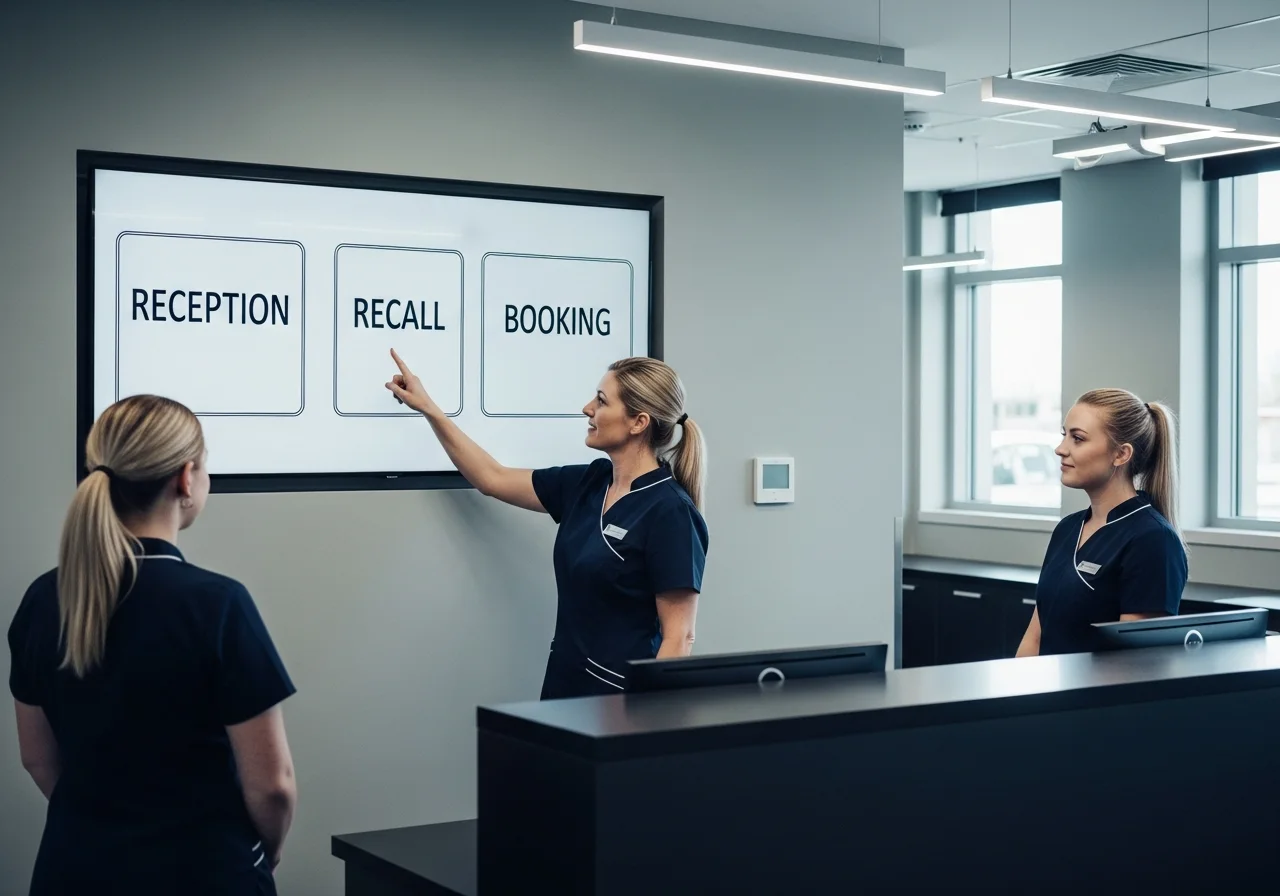

The three workflows worth automating
- Reception and enquiry handling.
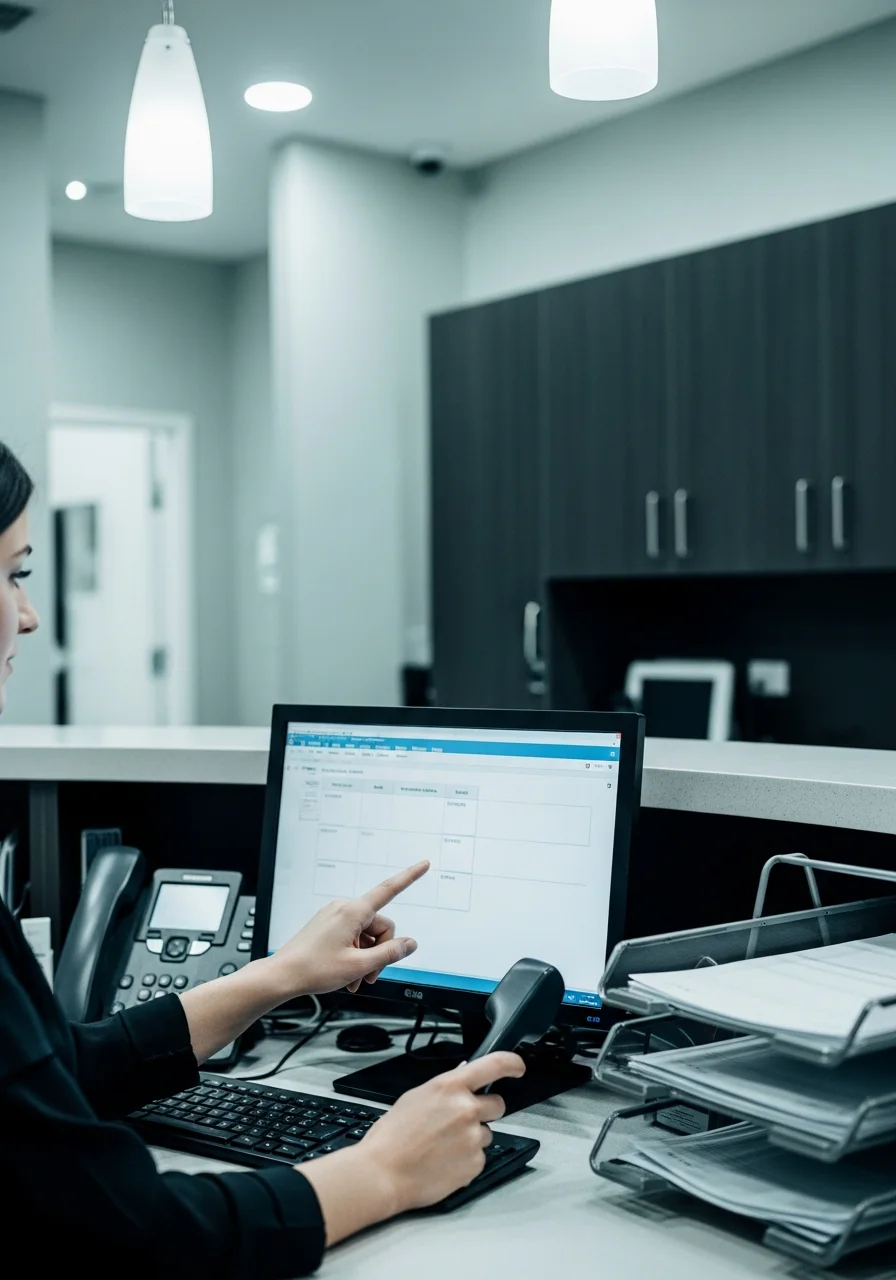
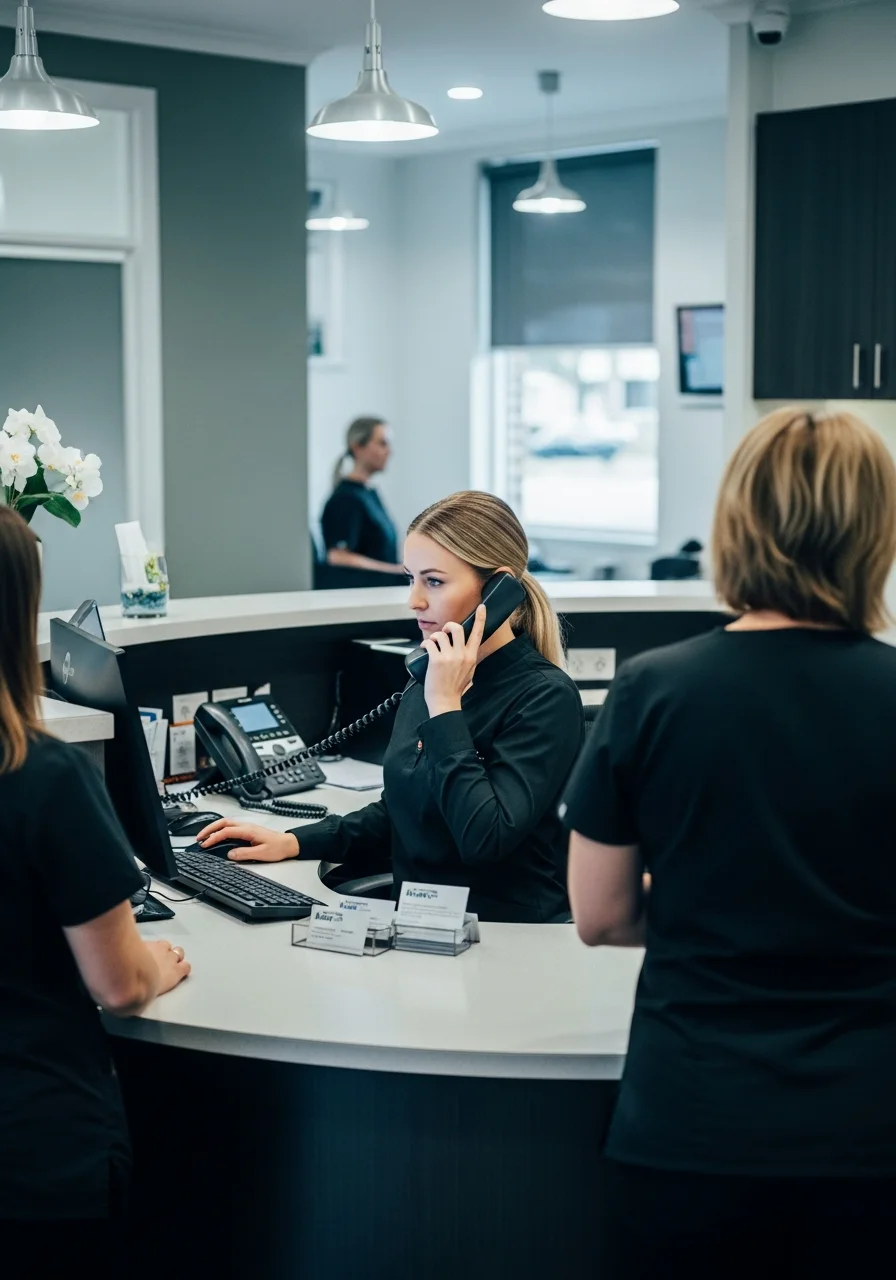
The routine inbound load — hours, location, "do you take my health fund," new-patient enquiries, after-hours calls — is high-volume and predictable, and an agent integrated with the practice's systems handles it around the clock. Critically, this should run on the hybrid model: the agent takes the routine and after-hours load, and anything sensitive or complex routes immediately to a human. The detailed case for that division of labour is in our comparison of AI receptionists versus human receptionists — for a dental practice, the line sits firmly on the side of keeping anxious or clinical calls with a person.
- Recall and reactivation.
This is arguably the highest-ROI workflow in a dental practice and the one most often handled inconsistently, because chasing recalls is exactly the repetitive, easy-to-deprioritise work that a busy front desk lets slide. An agent that systematically manages the recall cycle — identifying due patients, sending reminders, handling the booking when they respond — addresses a direct revenue gap. As a pattern we observe across appointment-driven practices, recall is where automation most reliably pays for itself, because consistency is precisely what humans struggle to maintain on repetitive follow-up and precisely what an agent is good at.
- Booking and reminders.
The end-to-end appointment loop — booking, confirmation, reminders, rescheduling — is repetitive, rule-based, and a major driver of no-shows when it's done inconsistently. Automating it reduces no-shows (a direct cost to any practice) and frees front-desk staff from the constant scheduling churn. This is the workflow with the clearest, most measurable return: fewer empty chairs, less staff time on the phone.
Where automation must NOT go (the part that protects your practice)
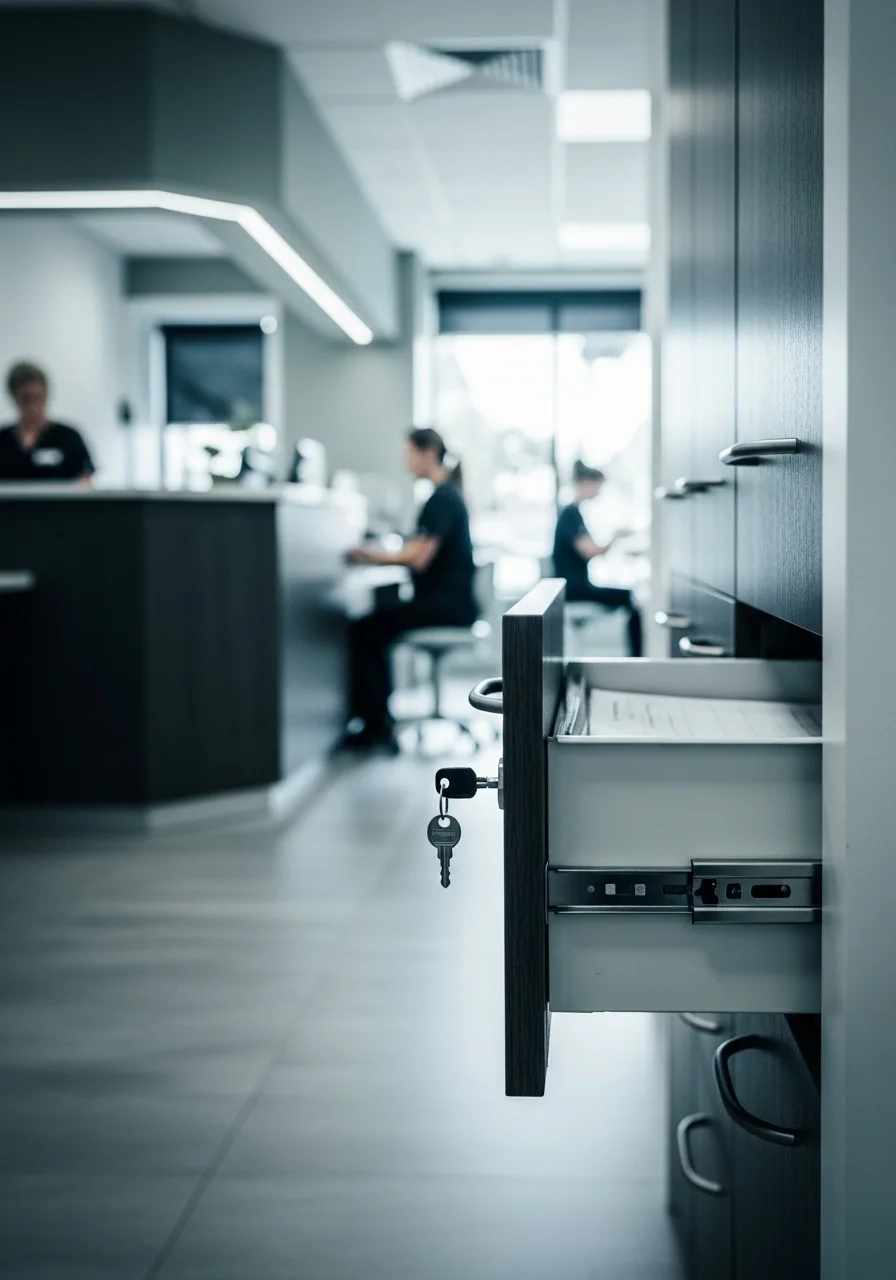
This is the section most dental AI pitches leave out, and it's the most important one. Dentistry is a care relationship, and several moments must stay human:

Anxious and nervous patients.
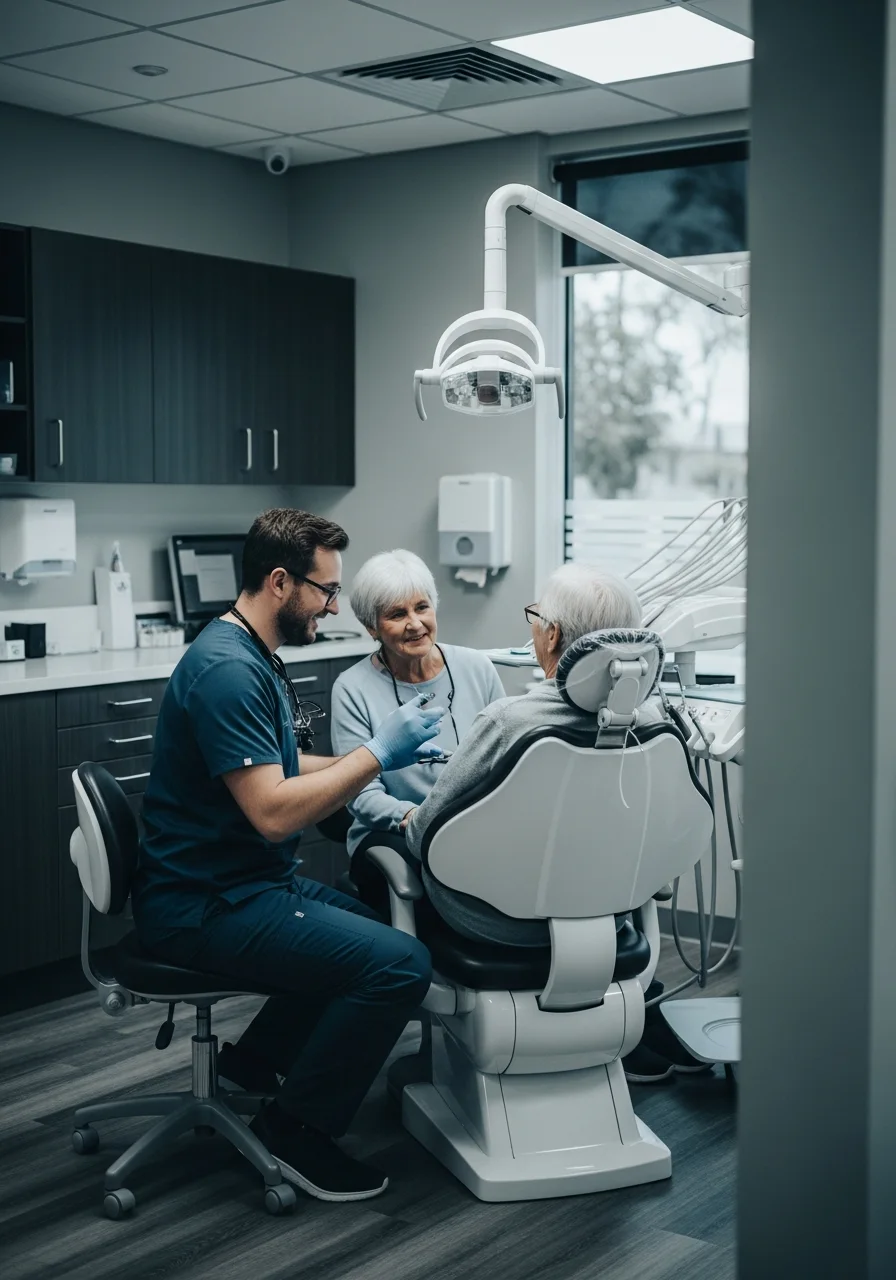
Dental anxiety is real and common. A patient who's frightened needs a calm human voice, not an efficient agent. Routing these to automation damages the relationship at the exact moment it matters.

The practical realities for a Melbourne practice
A few constraints worth knowing before you start. Integration is the main one: the value depends on the agent connecting cleanly to your practice management software, and how modern and accessible that system is will largely determine cost and complexity — the same integration reality that drives every AI agent project, covered in our guide to AI agent costs in Australia. Patient data also carries privacy obligations that a healthcare deployment has to handle properly, which is part of why dental automation should be built deliberately rather than bolted on from a generic template.
And the same staged approach that works everywhere applies here: start with one workflow — recall is often the best first candidate because the ROI is clearest — prove it works, then extend to the others. A practice that tries to automate reception, recall, and booking simultaneously on day one is taking the over-scoping risk that sinks projects, which we cover in how AI agent projects fail.
Good to know
Frequently asked questions
Straight answers before you book anything — and if yours isn’t here, ask us in the consultation.

Free consultation
Want your front desk freed up while bookings keep flowing?
We’ll review your practice’s workflows and show you where an agent can take over — recalls, reminders, after-hours bookings.
Book a consultation