In the digital age, a website's speed is a technical issue; speed significantly affects the performance of Search Engine Optimisation (SEO). A swift-loading website enhances user experience, reduces bounce rates, and significantly boosts search engine rankings. User experience is a top priority for Google and other search engines, making website speed crucial in search engine optimisation (SEO). In this blog, we’ll explore the importance of website speed for SEO performance, its impact on user experience, and practical ways to optimise your website for better rankings.
Why Website Speed Matters for SEO
Imagine clicking on a search result to encounter a loading screen or a blank screen bar stretching into eternity. Frustration sets in, and you'll likely hit the back button and explore other options. This scenario is an everyday reality for users encountering slow-loading websites. Partnering with thebest SEO company in Melbourne can help optimise your website speed, ensuring better rankings and user experience.
1. Google’s Algorithm and Page Speed
According to Google's explicit statement, page speed is a ranking factor for searches on desktops and mobile devices. Since the 2018 Speed Update, Google has emphasised the importance of fast-loading websites, especially on mobile devices. Websites with faster loading times are likelier to rank higher in search result pages (SERP), leading to increased organic traffic, 2—user Experience (UX) and Engagement.
A website's loading time significantly affects user experience. Studies show that:
- If it takes more than three seconds for a page to load, three seconds to load, 40% of users will leave.
- A one-second delay can reduce page views by 11% and customer satisfaction by 16%.
- Faster websites lead to higher engagement, lower bounce rates, and better conversion rates.
Google measures user engagement through metrics like dwell time, bounce rate, and pages per session. A slow-loading site discourages users from exploring, signalling to Google that your site may not provide a valuable experience. An ** **SEO expert in Melbourne analyses these metrics and implements solutions for improved performance.
2. Mobile-First Indexing
Google has shifted to mobile-first indexing, meaning it primarily uses your website's mobile version for ranking and indexing. A fast-loading mobile site is essential because mobile users often have slower network connections. Your rankings may suffer if your mobile site is slow, even if your desktop version is optimised.
3. Core Web Vitals and SEO
Google’s Core Web Vitals focus on three key aspects of page performance:
- Largest Contentful Paint (LCP): Measures how long the most significant content element is to load (should be under 2.5 seconds).
- First Input Delay (FID): Measures interactivity and responsiveness (should be under 100 milliseconds).
- Cumulative Layout Shift (CLS): Measures visual stability (should be under 0.1).
These factors directly impact rankings, making it essential for websites to optimise speed and user experience.
How Website Speed Affects Key SEO Metrics
**1. Bounce Rate :**If a website loads too slowly, users are likelier to abandon it before engaging with the content. A high bounce rate signals to search engines that users aren’t finding the helpful page, which can negatively impact rankings.
**2. Crawl Budget :**Every website has a crawl budget assigned by search engines, determining how many pages get crawled and indexed within a given time. Search engine bots may slow your website down. Might not crawl all your pages efficiently, leading to poor indexing and ranking issues.
**3. Conversion Rates :**Faster websites lead to better user experiences, resulting in higher conversion rates. According to research, reducing the time it takes for pages to load from 3 seconds to 1 second can increase conversion rates by over 20%.4 %. Time on Site and Engagement.
**4. Time on Site and Engagement :**Users are more inclined to investigate and interact with a fast-loading website, enhancing the overall user experience. High engagement rates and longer session durations indicate to search engines the value of the content, positively impacting search engine optimisation (SEO) rankings. A well-optimised website with faster page speeds improves organic search visibility, reduces bounce rates, and boosts overall SEO performance.
Strategies to Enhance Website Speed
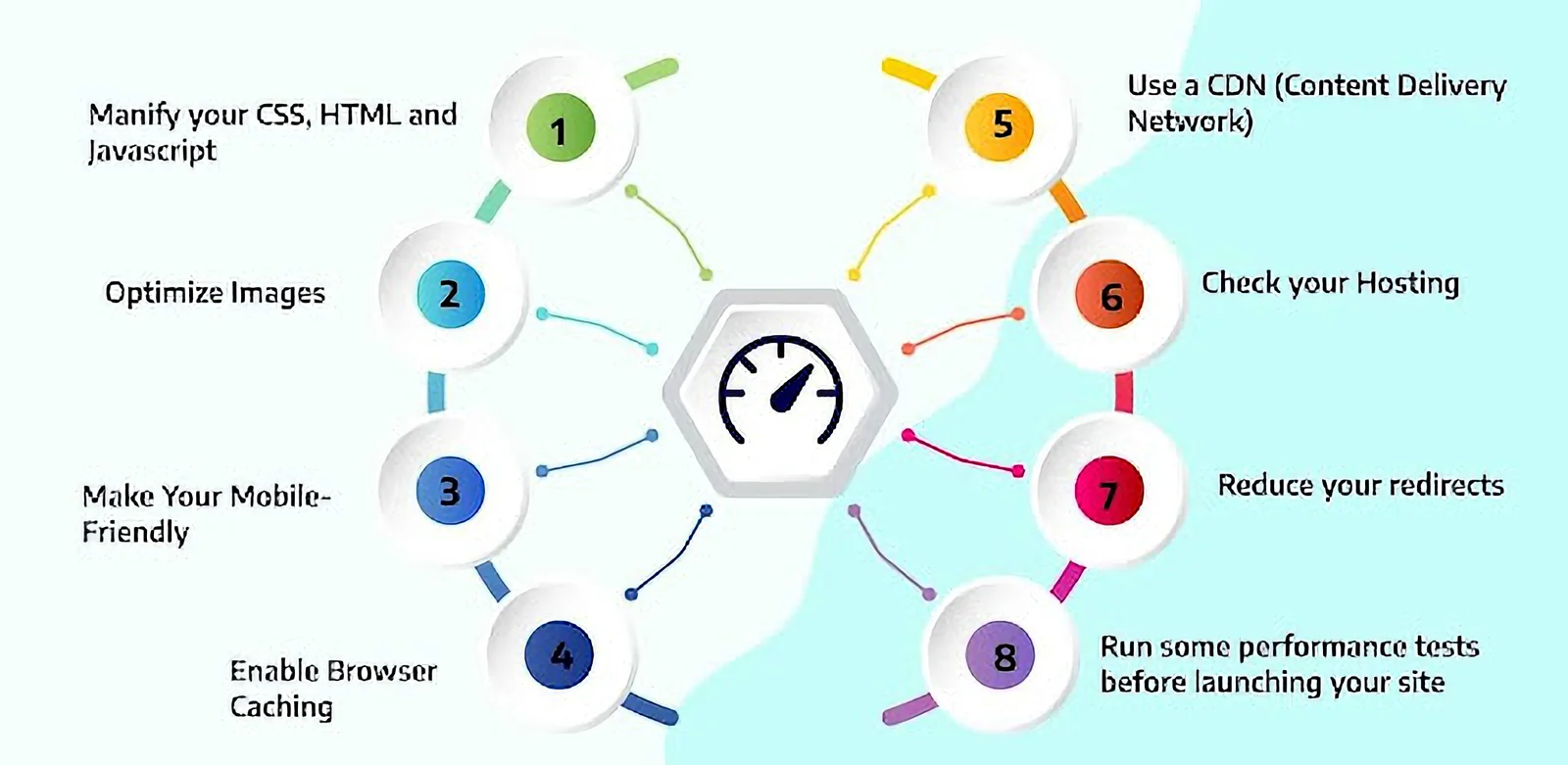
To increase a website's speed and, in turn, its SEO performance, consider implementing the following strategies:
- Optimise Images: Large image files are among the main causes of sluggish websites. Compress images using tools like Tinypng or ImageOptim and use modern formats like Webp to reduce file sizes without sacrificing quality. Optimised images enhance both website design and search engine optimisation.
**2. Enable Browser Caching:**Browser caching stores static files like images, CSS, and JavaScript on users' gadgets, enabling quicker load times for frequent users.. Implementing proper caching strategies can significantly improve website speed.
**3. Minify CSS, JavaScript, and HTML:**Reducing unnecessary characters, spaces, and comments in your code can reduce the size of files and expedite loading.. Use tools like Google’s PageSpeed Insights to identify areas for minification.
**4 . Implement Lazy Loading:**Lazy loading defers the loading of non-essential resources until they’re needed. This helps prioritise above-the-fold content and speeds up initial page rendering.
**5 . Monitor and Improve Core Web Vitals:**Use tools like Google Search Console, Lighthouse, and WebPageTest to analyse your Core Web Vitals and improve LCP, FID, and CLS scores.
**6. Optimise for Mobile Performance:**Since mobile-first indexing is a ranking factor, ensure your site is mobile-friendly by using responsive design, optimising images, and eliminating unnecessary elements that slow down mobile loading times.
Conclusion
Optimising website speed is paramount for enhancing SEO performance. For businesses in Melbourne, collaborating with experienced SEO experts and website design companies, such as Cogniva, can result in improved conversions, better user experiences, and higher search engine results. Regular analysis and optimisation of website performance are essential steps toward achieving digital success.