SEO for Dentists Melbourne
SEO for Melbourne dentists — rank for high-intent treatments and fill the chair with local search demand.

Cogniva is a Melbourne-based AI systems and search visibility consultancy working with dental practices. We approach dental SEO around how patients actually search — urgent, treatment, and local queries — and prioritise the local map pack and reviews work that delivers the fastest patient-acquisition returns. Because we work across both traditional and AI search, we keep practices visible wherever patients are looking.
SEO for dentists in Melbourne is its own discipline because dental patients search in distinctive ways — and a practice that understands those patterns captures patients its competitors miss. Some searches are urgent and ready to book ("emergency dentist Brunswick"), some are high-value and researched ("dental implants cost Melbourne"), and most are local ("dentist near me," "dentist Hawthorn"). Ranking for the right mix, in the right places, is what fills a schedule. This is part of our wider dental marketing approach; here we focus on search specifically.
How dental patients actually search
Dental searches fall into three types, each needing a different response:

Urgent searches
— "emergency dentist," "tooth pain dentist near me," "broken tooth [suburb]." High intent, ready to book immediately, often on mobile. The practice that appears first and can take the booking wins. These reward strong local visibility and an easy path to book.




The local map pack is where most dental enquiries happen
For dental, the Google map pack — the three local listings with a map — is often more important than regular organic rankings, because patients choosing a dentist look there first and judge on proximity, reviews and ease of booking. Winning it comes down to a few things done well:
A complete, accurate, actively-maintained Google Business Profile; genuine patient reviews in good volume and kept current; consistent practice details across the web; and local relevance built honestly. For a Melbourne practice, this local work is frequently the single highest-return SEO activity, and improvements often show within weeks rather than months. The full local playbook is in our local SEO Melbourne guide.




Reviews: a ranking factor and a deciding factor
In dental, reviews carry double weight. They influence your local ranking, and they heavily influence whether a patient chooses you once they see you — because choosing a dentist is a trust decision about a health service. A practice with many recent, genuine, positive reviews wins both the ranking and the click. Systematically requesting reviews from satisfied patients is one of the highest-return activities a practice can do, and one most do inconsistently.
The practical fix is to make asking systematic rather than occasional. A simple, well-timed prompt — a message after a positive appointment, made easy to act on — turns the steady stream of happy patients you already have into a steady stream of reviews, instead of leaving it to the rare patient who thinks to do it unprompted.
How you respond matters too. Replying to reviews — gracefully to the good, calmly and professionally to the occasional critical one — signals an engaged, trustworthy practice to both prospective patients and the local algorithm. Reviews aren't a set-and-forget task; they're an ongoing habit that quietly compounds.



Treatment pages that actually convert
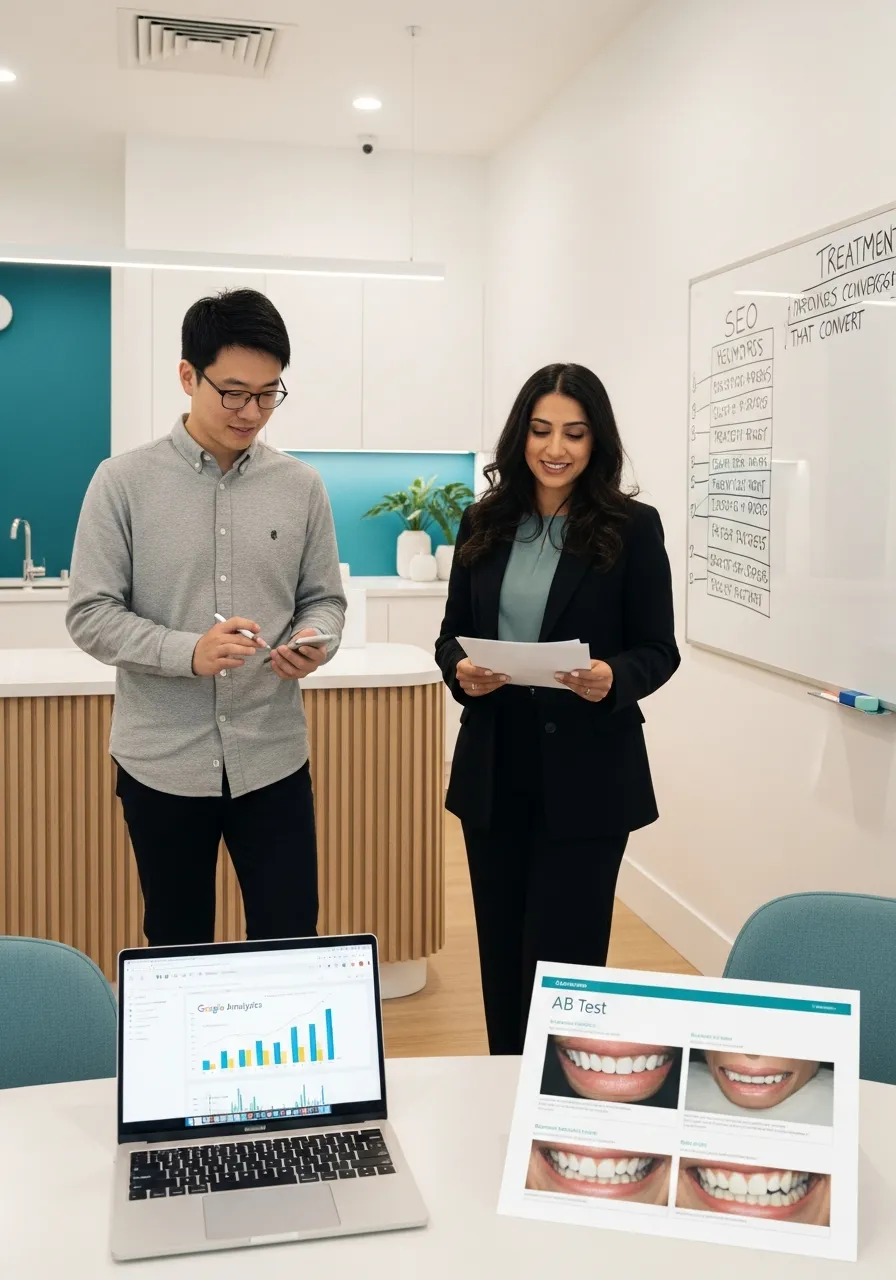
For higher-value treatments, generic pages don't rank or convert. A page targeting "dental implants Melbourne" needs to genuinely answer what patients want to know — realistic cost ranges, the process, recovery, what to expect — because that's both what ranks (Google rewards genuinely useful content) and what converts (a patient researching implants is evaluating whether to trust you). Thin, sales-only treatment pages lose to practices that actually inform.
A useful test: read your treatment page as a nervous patient, not a marketer. Does it answer the questions they'd actually ask — what it costs, whether it'll hurt, how long recovery takes, what the alternatives are — or does it just assert that you're experienced and caring? The pages that win are the ones that genuinely reduce a patient's uncertainty before they ever call.
Done well, each major treatment earns its own page and its own searches — implants, veneers, Invisalign, wisdom teeth — rather than one thin services page trying and failing to rank for all of them. That structure is both better for patients and stronger for search.




Where AI search is changing dental
Increasingly, patients ask AI tools — ChatGPT, Google's AI Overviews — questions like "best dentist for implants in Melbourne" or "is [treatment] worth it," and act on the answer. The practices cited in those answers gain patients before a traditional search even happens. The good news: the same work that wins dental SEO (genuine treatment content, strong local presence, real reviews) largely earns AI citations too. We cover this specifically in AI marketing for dentists.
What this changes, practically, is the timing of when you need to be visible. A patient who asks an AI tool for a recommendation and acts on it may never run the traditional search you were optimising for — so being part of that answer is becoming its own acquisition channel, not a nice-to-have.
The encouraging part bears repeating: there's very little separate work to do. Genuinely useful treatment content, a strong and consistent local presence, and real reviews are what earn both the ranking and the AI citation. Get the dental SEO fundamentals right and you're already most of the way to being the practice the AI names.
Good to know
Frequently asked questions
Straight answers before you book anything — and if yours isn’t here, ask us in the consultation.


Free consultation
Want your practice to be the one patients find — and choose?
We’ll review your practice’s search visibility against nearby competitors and show you the gaps worth closing first.
Book a consultation